
Digging up The Antiquarian
What I'm building, why it starts with a falling boulder, and where the first three months of digging have taken me.

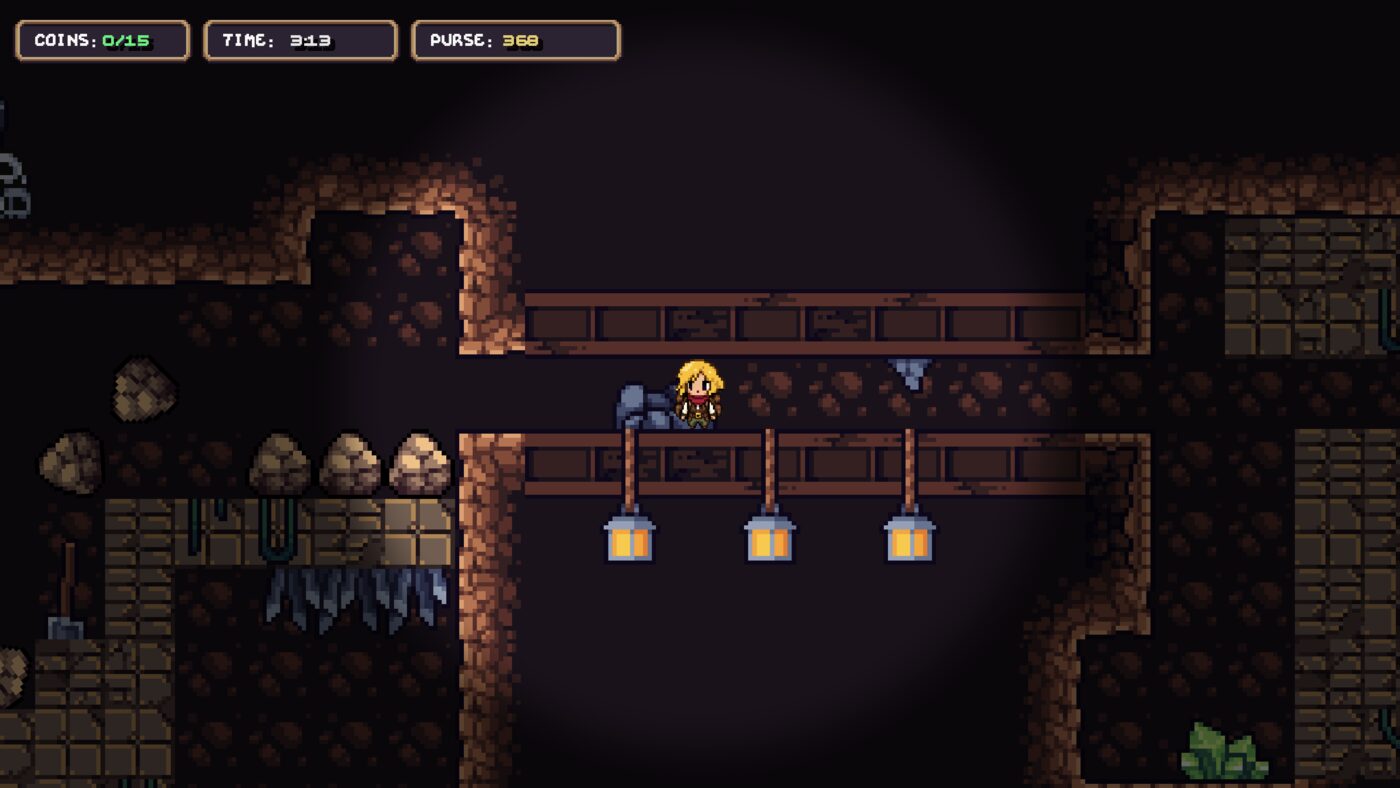
Hello — I'm Mert, and for the past months I've been building The Antiquarian, a pixel-art dig-and-sell adventure set in 1928. This is the first entry of Field Notes, the development log I'll be keeping from here to launch. If you like games about digging holes, dodging the consequences, and getting rich off things best left buried — pull up a lantern.
It starts with a falling boulder
I grew up on the Commodore 64 and the Amiga, and one law from those machines never left me: when you dig out the square under a boulder, the boulder falls. That single rule — gravity plus greed — powered some of the tensest games ever made. You weren't fighting monsters so much as fighting your own last decision, three seconds after you made it.
But those classic cave games always stopped at the cave mouth. You escaped with the diamonds and the game just… awarded you points. Nobody ever asked the obvious question: who's buying all these diamonds?
The Antiquarian is my answer. Every coin and relic you haul out of the dark gets sold, by lamplight, to fund the next leg of a journey. Digging is the verb; the economy is the reason. Dig up the past. Sell it. Buy passage deeper.
The loop
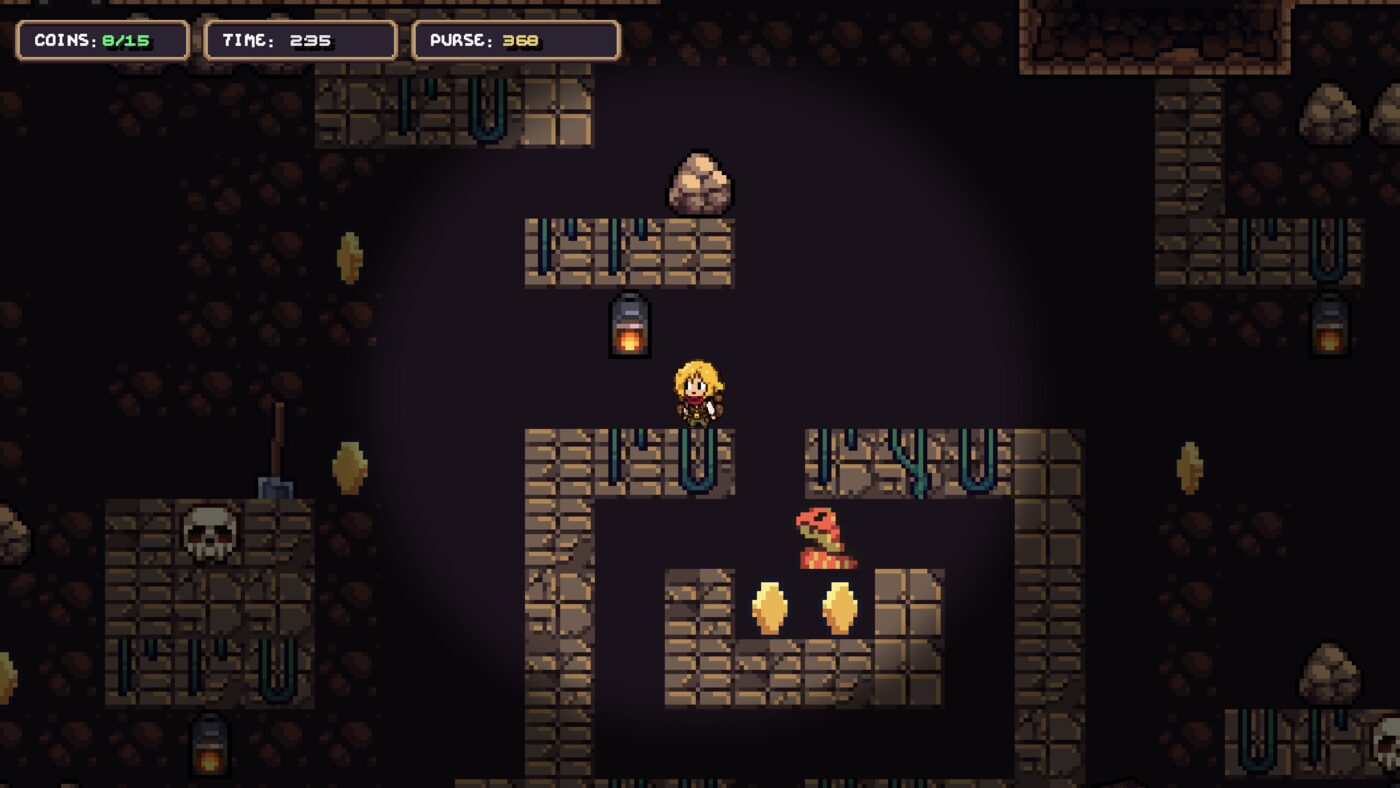
Inside a dungeon it's pure, old-school action on a grid: dig tunnels, undermine boulders, trigger avalanches on purpose (or, more often, by accident), meet the coin quota, and reach the exit before the timer does. One hit kills. My favorite moment in the whole game is what I call the cascade — one careless dig unzipping half the level in a chain reaction of stone and coins. Sometimes it's a catastrophe. Sometimes it's a payday. Usually it's both.
Outside the dungeon, you surface into a living town — market stalls, vendors, a harbor — where the real game continues: sell your haul, buy better tools, and eventually buy the one item that matters most, a travel ticket to the next city. There will be around forty handcrafted dungeons across three worlds. No procedural generation — every level is authored, the way the classics were.
And one rule I'll dedicate a whole future entry to: the coins you're carrying aren't yours yet. Die underground and the run's loot dies with you. That rule quietly runs the entire game — greed against prudence, every single screen. More on that soon.
1928, and a missing mentor
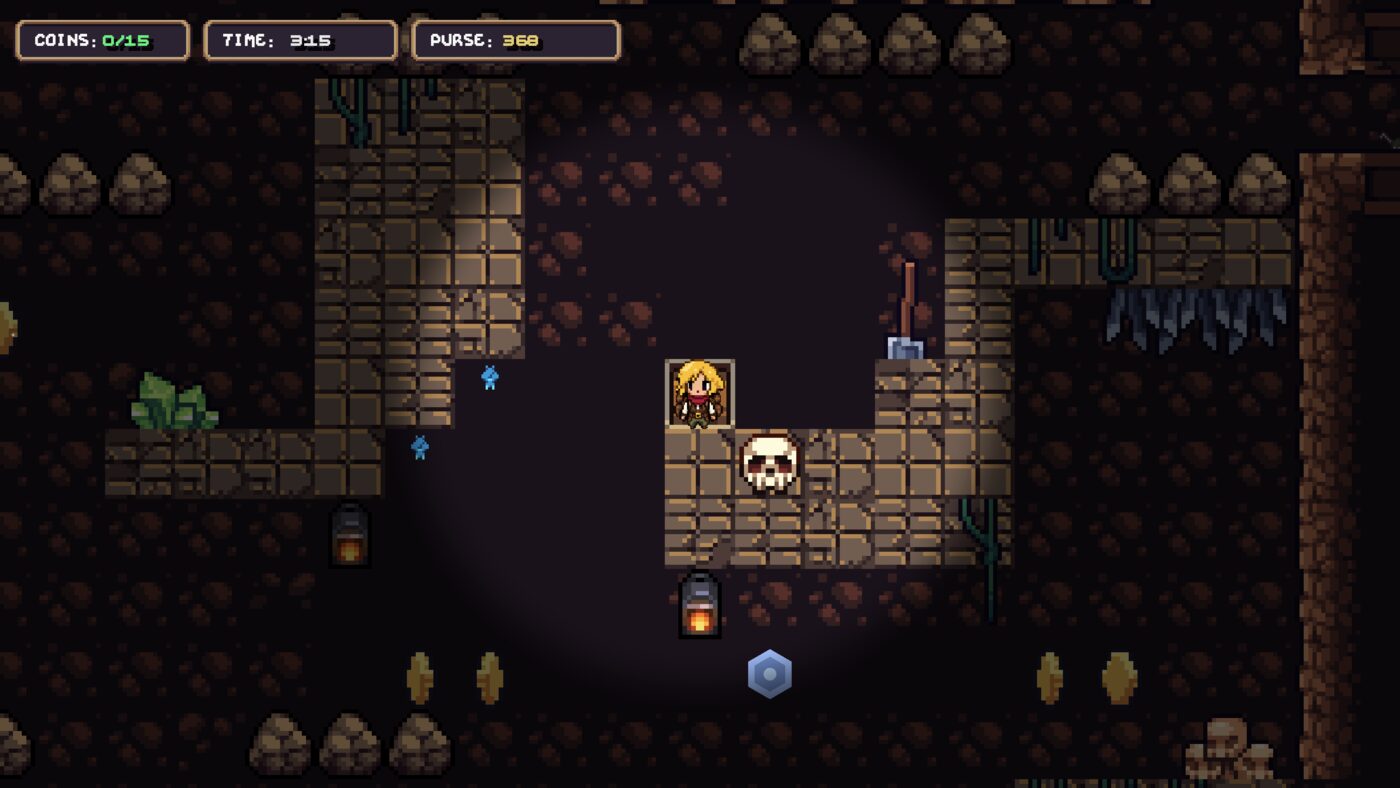
The game is set in a fictionalized interwar Europe. Zeppelins stitch the sky, radio crackles in the parlors — and past the mine gate, the modern world stops at the threshold.
You play Cora, a young antiquarian's apprentice. Three months ago her mentor packed a bag and vanished, leaving behind a journal, a hand-drawn map, and three place-names: a southern harbor town above drowned sea-caves; a mountain town whose mining company sealed its own lower levels in 1870 and then disappeared from its own records; and a cold northern moor where a castle was built for one purpose — to cap something. Cora follows the trail with an oil lantern, a satchel, and whatever the ground gives up. That's the budget.
Sell the object, keep the knowledge
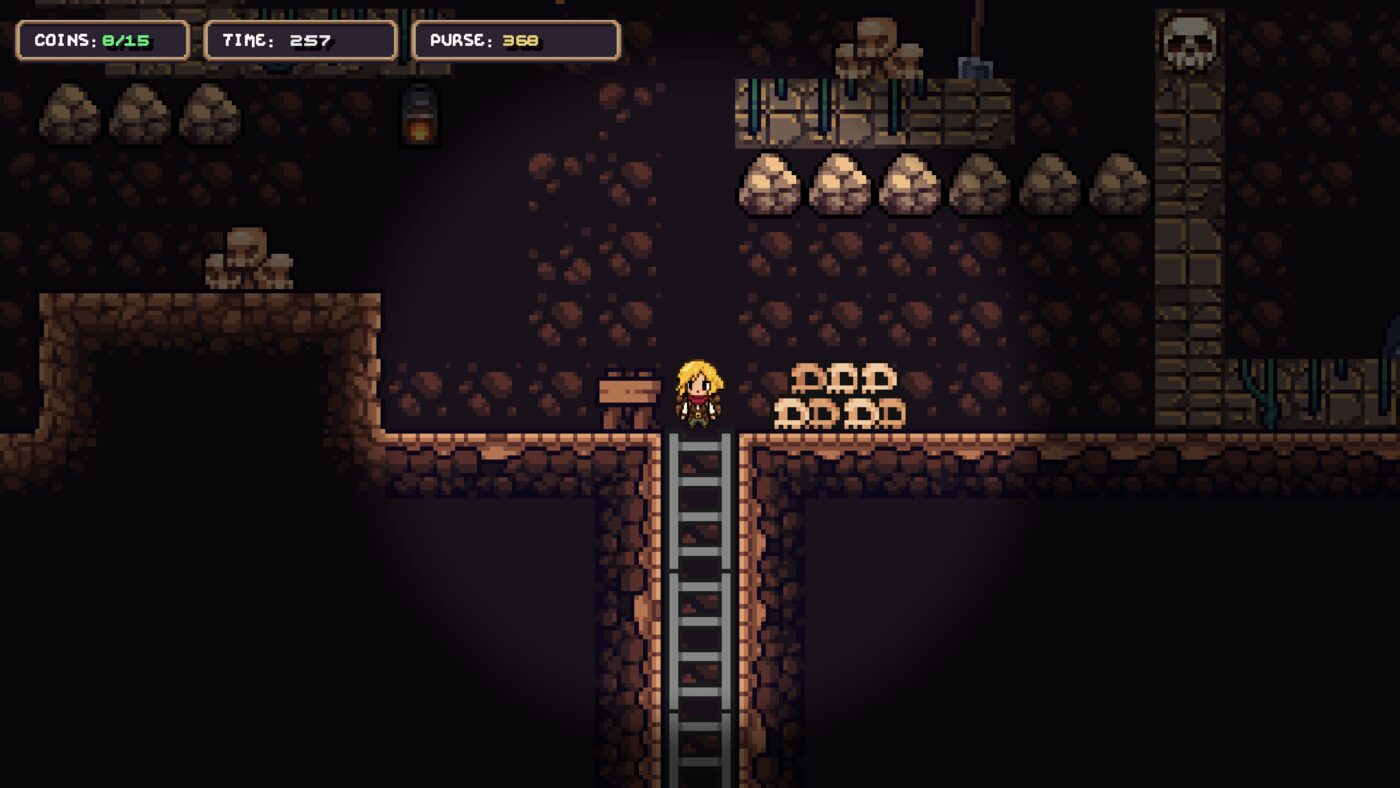
Cora is an antiquarian, not a looter — so the game keeps score in two currencies. Chests hide named antiques: a drowned chapel's bell, a foreman's watch stopped at 4:11, an idol from no culture in any book. The moment she lifts one, it's written into her catalogue forever. You can — you must — sell the object to keep moving. But the entry, the sketch, the story? Those stay yours. By the end, the catalogue itself becomes a record of what actually happened down there.
“Stopped at 4:11. Nobody has ever offered to say why.”— Foreman’s Watch · catalogue entry No. 27
Where the dig stands

Honest status report, because that's what this log is for. Most of World 1 — Cala Doria and its sea-caves — is playable today: the dig-sell loop works end to end, the town breathes, and the screenshots in this post are the actual game. Between now and mid-October the plan is: finish the remaining dungeons, put the HUD through a makeover it badly needs (you'll see the before/after here — it's humbling), cut the first trailer, and open the Steam page. A public demo follows in the autumn.
I'm building this as a small studio — Roogi Games, from Istanbul — which means every one of those items crosses my own desk. It also means this devlog is the closest thing the project has to a window: when something significant lands, you'll read it here first.
What happens next

Next entry: the HUD teardown — what was wrong with it, the ugly middle drafts, and what shipped. After that, the bestiary: the seven things that live in the dark and the different ways each one ends your run.
If you want these field notes in your inbox — plus the free wallpaper pack now, and the demo before anyone else — the signup is right below. And when the Steam page opens, you'll be the first to know.
See you underground,
— Mert